
In long-term and acute care settings, urinary tract infections are a familiar occurrence—especially with older patients and those who may be on catheters. As caregivers, our medical teams are continually looking for ways to improve the quality of care for our patients while avoiding over-prescribing medications that can have other negative side-effects.
Testing vs. UTI Symptoms
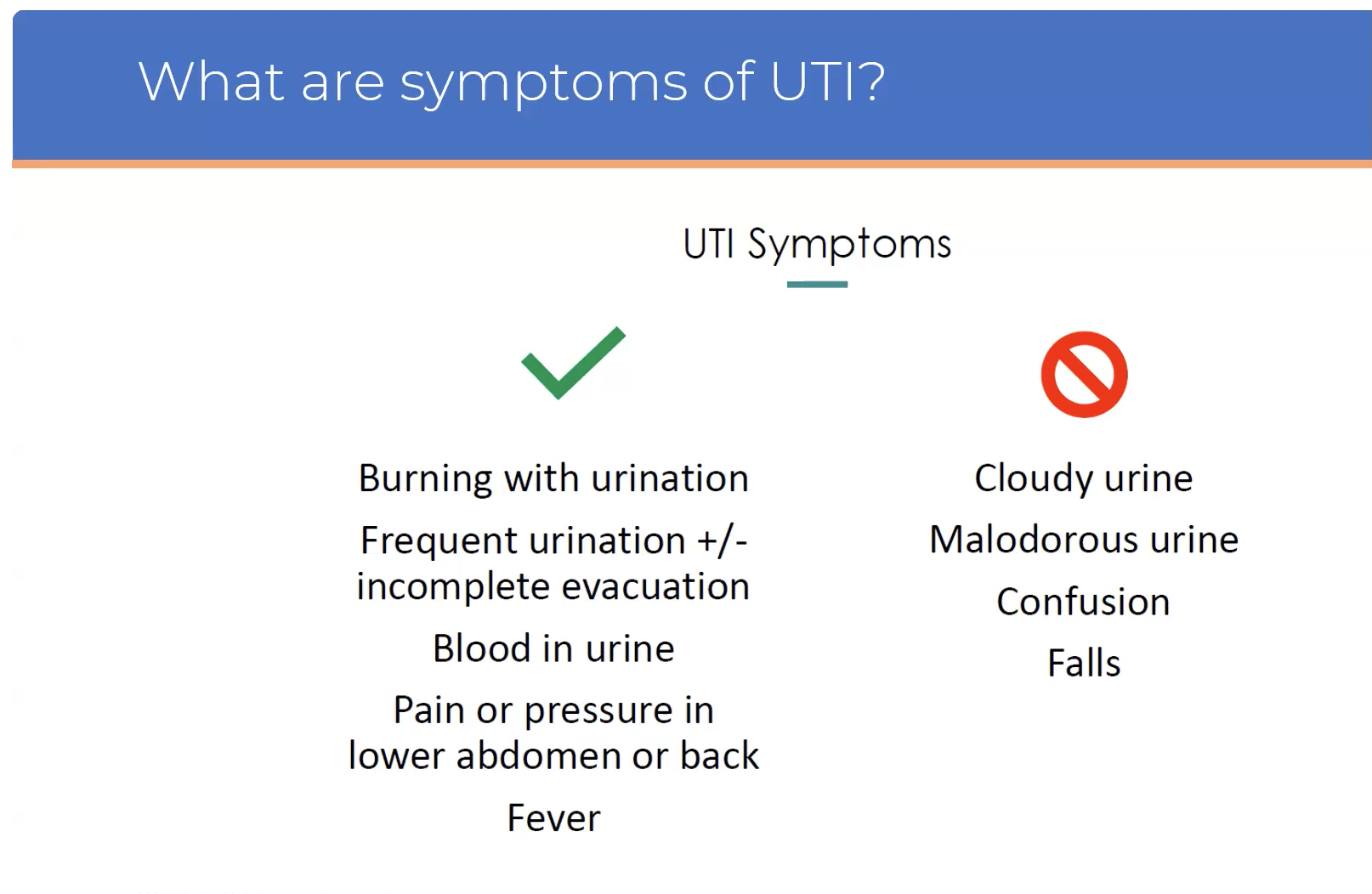
Although it can be a natural impulse to order a UA when a patient or family member mentions the possibility of a UTI, we must be cautious when testing in the absence of other clear UTI symptoms and follow established guidelines to ensure the best treatment for the patient. Simply detecting the presence of bacteria in the urinalysis is not a clear sign of a UTI without additional corroborating symptoms, such as tenderness, urinary discomfort, fever, or the like.
Confusion or falls on their own are not indicators of a UTI, and we need to stop the outdated practice of doing a UI for every patient as soon as they experience a fall, or when family report that the patient is confused. That is not an automatic indicator of a UTI in the absence of other major UTI symptoms. It is a good time to increase vigilance, ensure the patient is receiving adequate hydration, and rule out other possible issues.
Diagnostic Stewardship
In the facilities where I serve as Medical Director, we work with our teams and APPs to model careful diagnostic procedures, conduct abdominal exams when necessary, and ensure the careful prescribing of antibiotics—the right medications in the right situations—to minimize negative side effects for the patient, and increased antibiotic resistance.
Current research shows that the risk of serious medical complications and other health risks climb significantly with each additional day that our patients are on antibiotics, so ensuring that we only treat for the number of days required to get UTIs under control is also very important.
Don’t rule out prevention strategies
And with the hot days of summer upon us, it’s also a great time to ramp up our focus on hydration and making sure our patients are getting plenty of fluids throughout the day! Fluids are a proven method for reducing symptoms and preventing the onset of a UTI when we detect higher-than-normal bacteria in a patient’s UA.
PALTmed: Antibiotic Stewardship Resources
As the current President of PALTmed, our organization continues to develop tools and guidance to help all medical professionals in PALTC to provide the highest quality of care and best outcomes for their patients. The Antibiotic Stewardship page has a number of resources and ideas for your teams.
Other Announcements from PALTmed regarding UTIs
In a recent announcement, an expert panel from PALTmed has also recommended against the routine use of using PCR tests to diagnose UTIs, determining that in nursing home residents, they can provide fast results, but potentially lead to an overdiagnosis of UTIs and misuse of antibiotics.
Here is a link to the piece that was originally shared by PALTmed in the June/July 2025 issue of Caring for the Ages